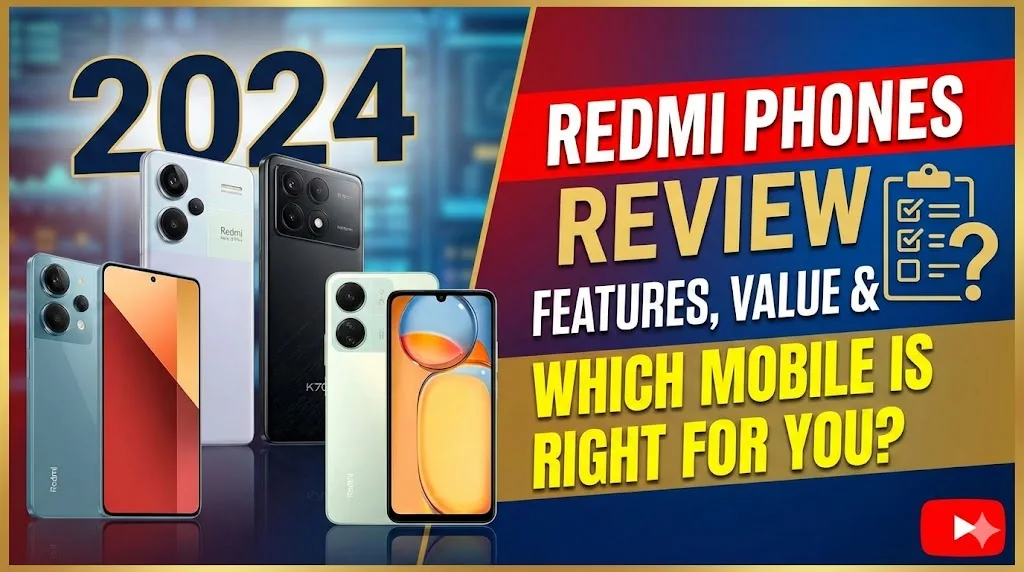
In the bustling world of smartphones, finding a device that perfectly balances price, performance, and features can feel like a quest. Enter Redmi phones, a sub-brand of Xiaomi that has consistently shaken up the mobile market. But are they all just hype, or do they offer genuine value? This comprehensive review dives deep into the core features, performance, and overall proposition of Redmi mobiles, helping you decide if your next phone should be wearing the Redmi badge.
The Redmi Philosophy: Disruptive Value
Redmi has built its empire on a simple, powerful idea: delivering flagship-level features at a fraction of the cost. This doesn’t just mean cheap phones; it means strategically prioritizing what matters most to users. From astonishing battery life to high-refresh-rate displays and capable multi-lens cameras, Redmi packs its devices with headline specifications that rival phones twice their price. This review will explore how this philosophy translates into real-world use, examining the strengths and inevitable compromises that come with such an aggressive value proposition. For anyone in the market for a new mobile, understanding the Redmi lineup is essential.
Key Features That Define Redmi Mobiles
Unbeatable Battery Life and Fast Charging Perhaps the most consistent feature across all Redmi phones is exceptional battery endurance. Redmi understands that a dead phone is a useless phone, and they equip their mobiles with large-capacity batteries, often ranging from 5,000mAh to 6,000mAh. This translates to easily one, and often two, full days of use on a single charge. But it doesn’t stop there. Redmi has been a pioneer in bringing incredibly fast charging to the budget segment. Where many competitors still offer 15W or 20W charging, it’s common to see 33W, 67W, and even 120W fast charging on Redmi devices, meaning you can power up in minutes, not hours. This combination is a game-changer for power users and travelers alike.
Display Technology: Smooth and Vibrant Screens
The display is your window to the digital world, and Redmi does not disappoint. Even their most affordable mobiles now often feature high-resolution Full HD+ screens with vibrant colors. The real standout, however, is the widespread adoption of high refresh rate technology. A 90Hz or 120Hz refresh rate makes every swipe, scroll, and animation feel buttery smooth, a feature once reserved for premium flagships. Many models also use adaptive sync to balance smoothness with battery savings. For media consumption and everyday interaction, the displays on Redmi phones consistently punch above their weight class, offering an immersive experience that belies their price tags.
Camera Systems: Versatility on a Budget Redmi’s approach to cameras is one of versatility. While you may not get the absolute best low-light performance found on ultra-premium devices, you get a remarkably capable toolkit. A typical Redmi camera setup includes a high-resolution main sensor, an ultra-wide lens for capturing landscapes and groups, and a macro or depth sensor for close-up shots. Software processing has also improved dramatically, with features like Night Mode, Portrait mode, and AI scene detection. This multi-lens strategy allows users to experiment with different styles of photography without needing a separate camera, making these mobiles excellent for social media content creators and casual photographers.
Performance and Software Experience
Processing Power for Every Need Redmi’s mobile portfolio is carefully segmented to match processors with user needs. Budget models typically feature capable MediaTek Dimensity or Qualcomm Snapdragon 4/6 series chips, handling everyday tasks, social media, and light gaming with ease. The mid-range and Note series often boast powerful Snapdragon 7 series or Dimensity 900/1000 series chipsets, which can handle intensive gaming, multitasking, and demanding applications. The software, Xiaomi’s MIUI (now transitioning to HyperOS), is feature-rich but can come with bloatware and ads. However, most can be disabled, and the sheer level of customization and useful features is a major draw for many.
Long-Term Software Support Historically a weak point, software support has become a greater focus for Redmi. While still not matching Google or Samsung’s long-term promises, many recent Redmi phones now come with a commitment to at least two major Android OS updates and three to four years of security patches. This is a significant improvement, ensuring your device stays more secure and potentially gains new features over a longer lifespan, protecting your investment.
Comparing Popular Redmi Series
To better understand the Redmi mobile lineup, here’s a comparison of its core series:
Redmi Mobile Series Overview
| Series | Target Audience | Key Focus | Price Range |
|---|---|---|---|
| Redmi A Series | First-time smartphone users, absolute budget. | Reliability, essential features, long battery. | Budget |
| Redmi Number Series (e.g., Redmi 13) | General budget-conscious users. | Balanced all-round performance, good cameras. | Budget to Low-Mid |
| Redmi Note Series | Power users, multitaskers, gamers. | High performance, flagship-like features, best value. | Mid-Range |
| Redmi Pro Series | Photography and design enthusiasts. | Premium design, advanced camera systems. | Upper Mid-Range |
Detailed Look: The Flagship Killer – Redmi Note Series
The Redmi Note line is arguably the crown jewel, embodying the brand’s “flagship killer” ethos. Let’s break down a typical spec sheet for a current model.
Hypothetical Redmi Note Series Features
| Feature Category | Typical Specification |
|---|---|
| Display | 6.7″ AMOLED, 120Hz Refresh Rate, 1200 nits peak brightness |
| Processor | Qualcomm Snapdragon 7s Gen 2 or MediaTek Dimensity 7200 Ultra |
| Memory/Storage | 8GB RAM + 256GB (common base variant) |
| Battery & Charging | 5,000mAh with 67W fast charging in-box |
| Main Camera | 108MP with OIS (Optical Image Stabilization) |
| Software | Android 14 with HyperOS, 3 years of OS updates |
Key Advantages of the Note Series:
-
Performance Champion: Offers the best performance in its price bracket.
-
All-Day Power: The combination of a large battery and efficient chipset.
-
Display Leader: Often introduces new display tech to the mid-range.
-
Camera Innovation: Frequently the testbed for new camera sensors.
Is a Redmi Phone Right for You? The Trade-Offs
No mobile review is complete without considering the compromises. Redmi’s incredible value often comes with some trade-offs:
-
Software Experience: MIUI/HyperOS can feel heavy and includes promotional content.
-
Build Materials: While design is good, more polycarbonate (plastic) is used compared to flagships’ glass and metal.
-
Low-Light Photography: While good for the price, it can’t consistently match premium sensors.
-
Availability of Bands: In some regions, ensure the model supports your carrier’s LTE/5G bands.
Who Should (and Shouldn’t) Buy a Redmi Phone
| Ideal For… | Might Want to Look Elsewhere If… |
|---|---|
| Budget-conscious buyers wanting max specs | You prioritize a clean, stock Android experience |
| Gamers on a budget | You need the absolute best camera, especially for video |
| Users who prize battery life above all | You strongly prefer compact, lightweight phones |
| Tech enthusiasts who love tinkering with settings | You need guaranteed long-term (4+ year) software support |
Frequently Asked Questions (FAQs)
What is the main advantage of Redmi phones?
The main advantage is offering flagship-level features like high-refresh-rate displays and fast charging at a highly competitive price point, providing exceptional value for money.
Are Redmi phones good for gaming?
Yes, particularly the Redmi Note series, which often uses powerful mid-range processors capable of handling popular games like COD Mobile and Genshin Impact at medium to high settings.
How is the camera quality on Redmi mobiles?
Camera quality is generally very good for the price, offering versatile multi-lens setups for different shooting scenarios, though low-light performance may not match ultra-premium flagships.
Do Redmi phones receive regular software updates?
Software support has improved, with recent models typically receiving 2 major Android OS updates and 3-4 years of security patches, though this varies by model.
What is the difference between Redmi and Xiaomi?
Redmi is a sub-brand of Xiaomi focused on value-oriented and budget phones, while the main Xiaomi brand (like the Xiaomi 14 series) targets the premium and flagship market.
Where can I buy genuine Redmi phones?
Purchase from official Xiaomi stores, authorized retailers, or well-known e-commerce platforms to ensure you get a genuine device with a valid warranty.
Summary
In conclusion, Redmi phones stand as formidable contenders in the mobile market by masterfully balancing cost and capability. This review confirms that their strengths in battery life, display smoothness, and overall feature set offer undeniable value. While trade-offs exist in software polish and material choice, for most users seeking a powerful, full-featured mobile without a premium price tag, a Redmi phone, particularly from the Note series, is an outstanding choice that continues to redefine expectations in its category